christ

School: School of Sciences

  • Research Code of Ethics (Mathematics)

    CHRIST (Deemed to be University), Bengaluru
    Department of Mathematics
    Research Code of Ethics

    Research and teaching form the backbone of Department of Mathematics. Accordingly, Department of Mathematics assumed a responsive role in order to promote academic research in diversified disciplines in Mathematics through the establishment of Research Development Cell. The Department of Mathematics provides faculty members, post graduate students and M Phil and Ph D scholars an opportunity to further deliberate and expand their ideas and views through projects at PG level, paper publications in refereed journals, participation and presentations in National/International conferences. The Research Development cell has the following specific objectives;

    • To promote and facilitate advanced research among faculty members of the Department.
    • To serve as a resource center providing professional guidance and technical support.
    • To carry out independent research of significance on topics of academic and professional interest.
    • To develop and provide relevant data base support to faculty members and post graduate students pursuing doctoral research.
    • To identify research areas and specify research topics of academic and practical significance.
    • To develop & promote Consultancy Projects for application of knowledge for the advantage of the end users.
    • To facilitate the review of reports submitted by the research scholars
    • To organize such of the activities which directly or indirectly facilitate the research and consultancy activities

    The activities of Research Development Cell are:

    • bi-annual reviews with external experts,
    • presentations at seminars/conferences,
    • involvement/engagement of students,
    • discussion with colleagues,
    • interaction with experts
    • Involvement of departmental/deanery colleagues in projects.

    Research Development Cell comprises of four members head of Department, Coordinator for PG programs and two senior researchers. They represent three major areas of Mathematics research namely, Fluid Mechanics, Graph Theory and Riemannian Geometry. RDC committee will have regular meetings (once in a semester) to enhance research. Sub-committees shall be formed to look into various aspects of research in postgraduate/M Phil/Ph D curriculum. The recommendations of subcommittee shall be validated in the Department meeting and CDC shall forward it for final approval in BOS. The department of Mathematics follows Institution policy of code of ethics.

    Policy

    The department will encourage publication of all material outputs of its Researchers irrespective of whether they support or contradict the Research outcome(s). There shall be adequate and effective mechanism set by department to ensure regular check on the compliance of the prescribed codes and guidelines throughout the Research process from the start till the delivery of its final output.

    Regulations

    1. The entire research process at the department including the outputs thereof in the form of publications, research reports(Minor and Major research projects, Monographs and working papers), Academic and consultancy research, formal and informal research programs and any such research activities will be covered under this policy and Regulation which will apply to all approved Researchers at the university including but not limited to University teachers, Staffs, students, Post Doctoral Fellows and Emeritus Fellows.
    2. Externally funded research projects shall be additionally guided by specific instructions if any of the concerned funding agency as long as they do not contradict with the provisions contained in this regulation.
    3. Code of Research conduct and the research ethics herein stated are inter-related and complementing to each other(may be overlapping as well) and hence must be applied carefully with due regard to the research problem. These are not administrative rules and therefore the conscience of researchers may be the best guide to ensure that conduct of research is not entirely left to the discretion of individual researchers while  addressing the ethical dilemmas that may crop up.

    1. Everyone involved in research (Sponsors, Investigators, Associates, assistants,Supervisors and any others generally referred to herein individually and collectively asresearchers) in the Department owes a duty of accountability to society, to their profession, to the university, to all participants in the research and to its funding agencies. Hence no one shall embark on any Research Activity without acquiring adequate
    theoretical and practical knowledge about the process and conduct of research.
    2. Researchers should undertake only such research that according to their understanding will be useful to society or for the furtherance of knowledge on the subject.
    3. Researchers must accept full responsibility for their research conduct and for the activities of all persons involved under their direction or supervision.
    4. Researchers must be honest and lawful in respect of their own actions in research and in their responses to the actions of other researchers. This applies to the whole range of research work, outputs and deliverables, including applying for funding, research design, generating and analyzing data, publishing results, and acknowledging the direct and indirect contribution of colleagues. Collaborators and others.
    5. Any Research must have a clearly defined objective and must be done meaningfully with full adherence to quality aspects. Research for research sake without creation of new knowledge or new dimension to existing knowledge will be considered unsatisfactory with reference to this code.
    6. Researchers must encourage peer review as an essential part of every research endeavor and must take into consideration all valid comments thereof at different stages of research process may be deemed relevant and appropriate. However the reviewer chosen must be able to do the task objectively, impartially and constructively.
    7. Researchers must ensure integrity of financial management of research project to provide the optimum value for the public or private funding agencies with appropriate quality standards, as well as timely delivery of any scheduled tangible outcomes.
    8. Researchers must ensure that all personal records of research progress, including books, are maintained to the recommended or required standards, and that the falsification of results does not occur.
    9. All research data must be in a durable form with appropriate references. All such data must be retained intact for a period of at least seven years from the date of any publication which is based upon them. Data should be there in their original form, i.e, tapes/discs, etc., and should be deleted and reused, but kept securely as per approved procedure as may be prescribed be the center for research of the university. These procedures must be made known to and compiled by all the members of the research team.
    10. Researchers must ensure that the participants are allowed to participate voluntarily without any fear or favour and absolutely free from coercion in an environment of least harm or risk to all living beings and to property.

  • Research (Mathematics)

    The Department of Mathematics focuses on high-quality research and has implemented successful research practices to promote research-based teaching-learning and knowledge production.
    The department is active in research, primarily in the areas of Fluid Mechanics, Graph Theory, Differential Geometry and Mathematical Modeling. Our faculty members are well established and well recognized researchers in their areas of specialization. The presence of emeritus professors nurtures the ambience for quality that facilitates constructive discussions, fruitful deliberations and critical evaluation of the projects that help the aspiring researchers to produce quality output.
    Good number of faculty have working collaboration with eminent researchers from countries spread across the continents leading to high-quality, high-impact collaborative research papers, book chapters and books. The h-index of about one third of the faculty are above 10 and have published more than 70 articles with good number of citations. They also contribute to the knowledge economy by serving in the editorial boards, reviewing articles and disseminating their knowledge as resource persons at several national and international conferences.
    A total of 21 candidates have secured their doctoral degree and 53 doctoral students are pursuing their studies in the department. To ensure good quality of research undertaken by students, a minimum of two Scopus/Web of Science indexed publications are made mandatory for the submission of the doctoral thesis. Bi-annual assessment of progress in research and nature of research further ensures that the best standard is maintained. Research projects are mandatory at the postgraduate level and ample opportunities are provided for doing research-based projects at the undergraduate level also.

  • Research (life sciences)

    Phytochemistry and Plant Secondary Metabolites Waste valorisation for production of microbial metabolites
    Genetic Toxicology Biofilm disruption studies
    Microbial therapeutic metabolites Probiotics and nutraceuticals
    Biofuels and Biopolymers Bacterial Genomics
    Aquaculture and Aquatic toxicology Nanotechnology and Bioremediation
    Natural Product Research Pharmacogenetics
    Molecular phylogenetics Micropropagation
    Plant taxonomy Microbiome studies
    Biocontrol of insect pests Microbial enzymes
    Drug discovery study through computational biology Molecular Epidemiology of Infectious Diseases
  • Postgraduate Research Program ( chemistry )

    Department of Chemistry, CHRIST (Deemed to be University) provides opportunities for postgraduate students to get involved in research right from the first year of their university education. This will provide them with ample time and possibility to drive their research to greater heights.

    Courses offered: 

    1. Scientific writing and communication
    2. General Research methodology
    3. Project


    Research Activities

    Research Seminar Series
    Students are given an opportunity to present scientific articles. This enables the students with the skills of reading, consolidating, analysing and presenting the articles in the forum of academic peers.

     Paper Presentation
    Students are encouraged to participate in national and international conferences and present their research. This will foster development of academic network and collaborations.

    Workshops – Hands-on-training
    The department provides workshop for handling of the scientific instruments in the university which will be useful to the students in their future research career. 

    Invited talks by Eminent expertise
    The department organizes talks by eminent scientist, entrepreneurs and researchers which provides an opportunity for the students for fruitful interactions and collaborations.

    Visit to reputed scientific institutes and organization
    As part of experiential learning the students are taken to industries and institutes relevant to the courses which provides and up-to-date understanding of the applications of the subject.

    Research Newsletter
    The research newsletter describes outstanding output in terms of number of research articles from the department in an academic year as combined efforts from research scholars, science students and their principal investigators. It gives reader a brief idea about current status of research groups, their research activities and long-term research goals.

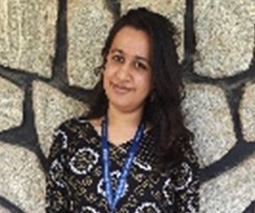
    Testimonials

    Archana Kaliyaraj Selva Kumar (PG)

    The research opportunities at the Department of Chemistry, Christ University, helped me find my passion towards research. I got exposure to various synthesis routes and instrumentation techniques.  These were taught out of the regular curriculum due to my interest in research during my post-graduation, which were the stepping stones of my research career at University of Oxford, UK


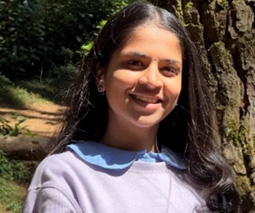
    Ajay Jose (PG)

    I received my primary experience in research from Christ University during my Masters in Chemistry.  I was able to publish around 5-6 papers during the time I worked at Christ University as both first and co-authored which boosted my CV for PhD applications. Currently I am a doctoral candidate at University of Auckland.


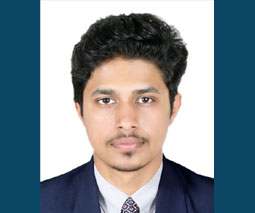
    Samika Sanjay Anand (PG)

    The Department of Chemistry at CHRIST (Deemed to be University) ensures that a research scholar here, undergoes holistic development; academically, scientifically, socially and emotionally, making him/her confident and bold enough to face the real world. I joined Christ University as a MSc student, and was quite encouraged by my teachers to pursue research at the PG level. With their exceptional support and guidance, I published a paper in a Q2 ranked journal; which further motivated me to join for PhD. I can proudly say that the PhD programme offered here, has given me immense confidence and knowledge, making me outshine scholars of my age, elsewhere. I am currently pursuing my research, with JRF under the scheme of “Innovation in Science Pursuit for Inspired Research (INSPIRE)” by the Department of Science and Technology (DST), Government of India.


  • Undergraduate Research Program ( chemistry )

    Department of Chemistry, CHRIST (Deemed to be University) provides opportunities for undergraduate students to get involved in research right from the first year of their university education. This will provide them with ample time and possibility to drive their research to greater heights.

    Highlights of the Undergraduate Program

    • Dissertation in chemistry
    • Research Methodology

    Courses offered:

    • Skill enhancement course on scientific writing and publications
    • Research methodology

    Research Activities

    Poster Presentation Day

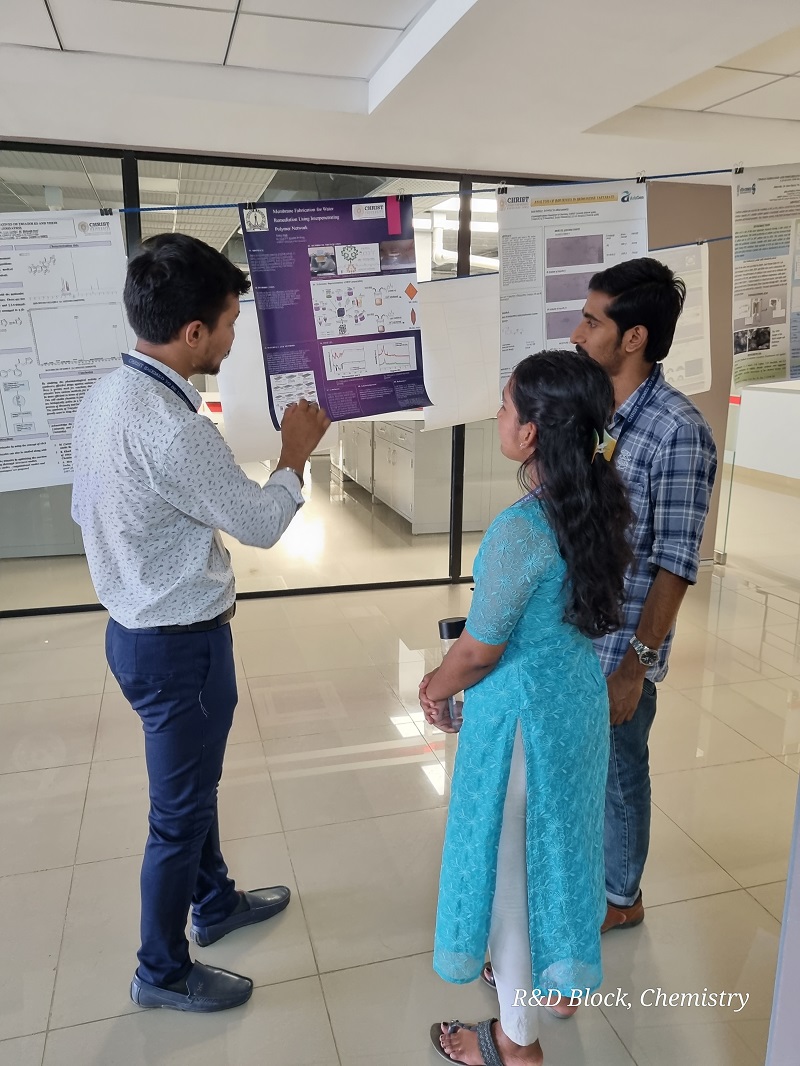
    Students get an opportunity to present their research in the form of a poster which will be displayed in the university on a selected day of scientific significance.

    Summer Vacation Project based on UNSDGs

    The department pays utmost importance in implementing the UNSDGs. This is achieved through summer vacation projects for undergraduate students.

    Science Exhibition

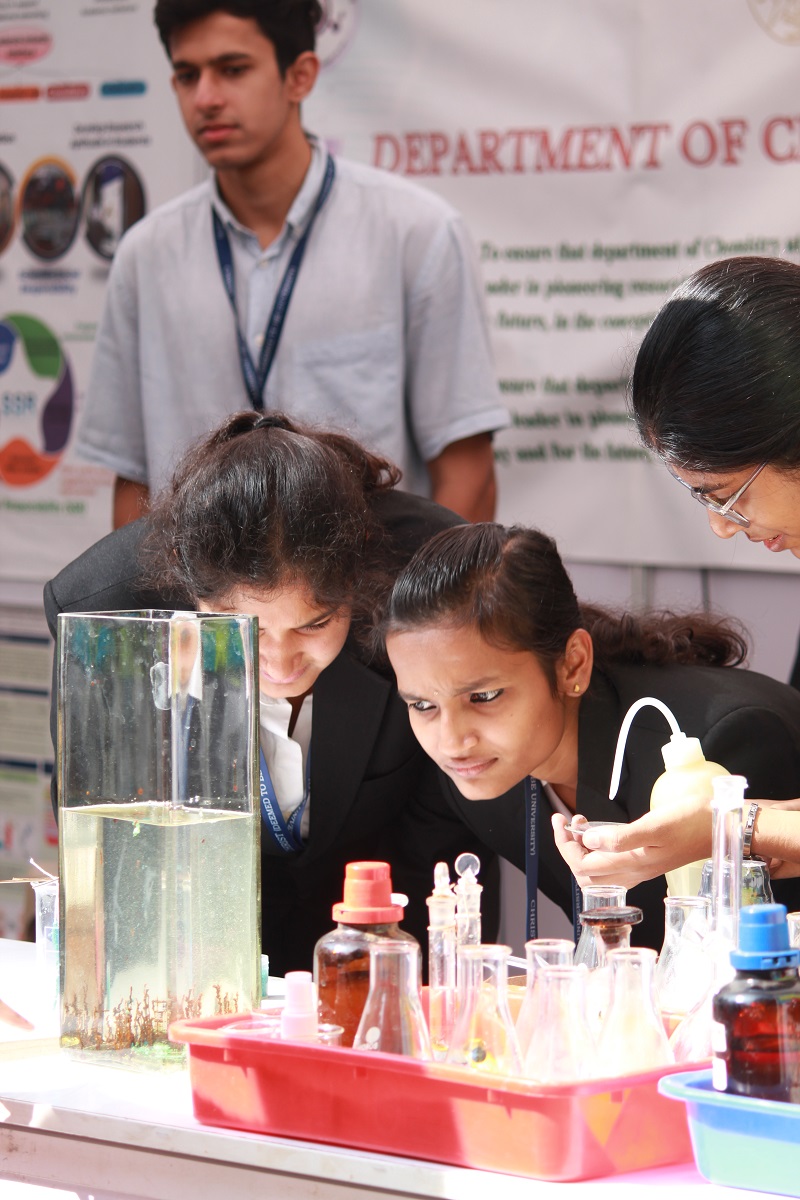
    The department takes special interest in nurturing the kinesthetics learners by providing opportunity for them to exhibit their projects in the Science exhibition organized around the National Science Day.

    Open ended experiments

    Students are provided a platform to explore their creativity by designing chemical experiments based on sound scientific principles as part of their practical courses.

    Stories/ Testimony

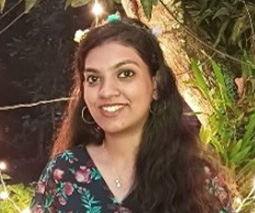
    Madhushree R (UG)

    The curriculum is designed in such a way that students are capable enough to get into research at the early age of their Bachelor’s as well as Master’s program. The exposure to research during my UG program (Dissertation course) developed an enthusiasm in me to step into the scientific field, which resulted in an internationally reviewed paper publications. The motivation and confidence built in me was carried out as an active researcher during my Master’s. At present, I am a PhD scholar at the Dept of Chemistry, Christ University.


    Gokul Krishnan (UG)

    Research at Christ university has helped me gain hands-on experience in applying theoretical knowledge in real world situations, improving my thinking beyond the classroom.  Presenting my project to faculties has improved my presentation, speaking and communication skills.  Research skills and experience that I gained from Christ university has helped me choose my path forward in research.


    Amy Jose K (UG)

    The department has always tried to include research into the curriculum, thereby encouraging students to actively participate in various works that can boost the profile of the students. I believe that this early exposure to research has helped me to hone my skill sets.

  • Research ( chemistry )

    Let us experience research – Curious to Know?

    Special Rewards

    Exposure to diverse research areas
    The department has 24 faculty members involved in research in diversified areas of chemistry. As a student you will be able to pick and choose the areas you want to explore.

    Scientific temper
    As a budding researcher you are bound to develop a belief in cause and effect, curiosity, objectivity, critical and open mindedness, risk taking ability, intellectual honesty, humility and responsibility.

    Recognition through paper publications and presentations
    An opportunity to be co-authoring with experienced faculty members and gaining visibility in the scientific world.

    Team Building
    Modern scientific discoveries are results of collaborative work. As a budding researcher, you will get an opportunity to join with a scientific team working on investigations which you are interested in. In the team you will assume different roles as time progresses and situations demand.

    Higher study opportunities
    As a researcher you get numerous opportunities to interact with great scientists, attend conferences, and share your thoughts with the contemporary scientists. The scientific rigour that you have experienced will develop and equip you to seek higher studies positions in national and international institutes of repute.

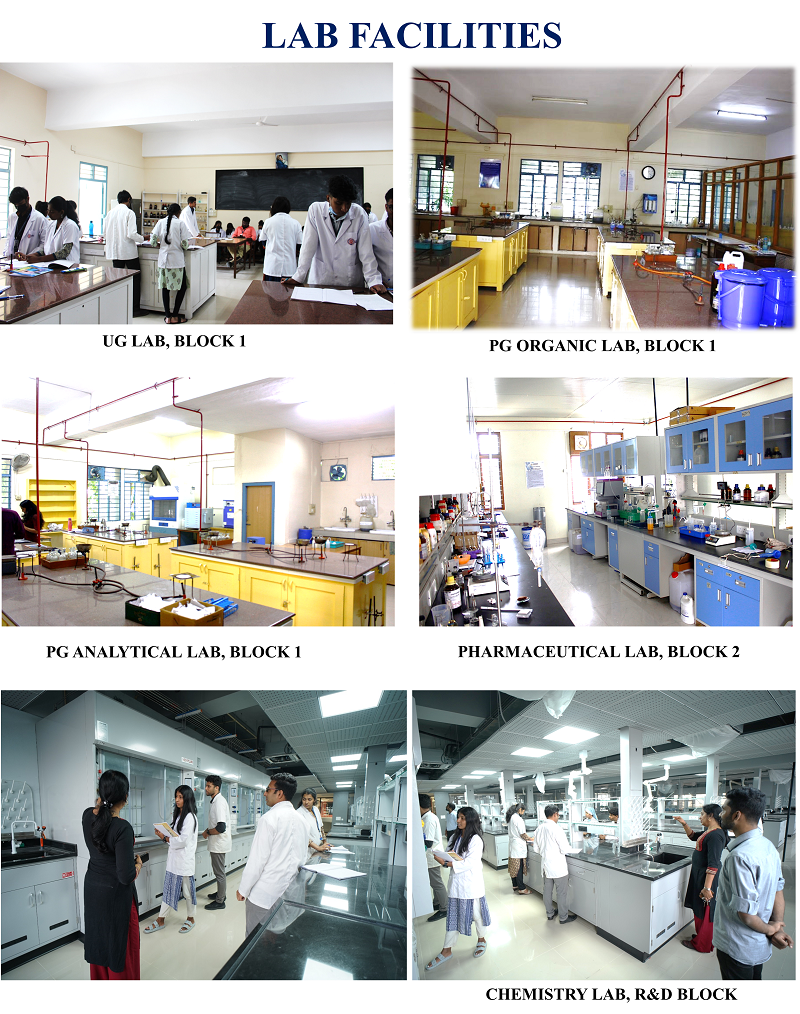
  • Research facilities ( chemistry )

    Training and Projects for students
    Post Doctoral Fellowship
    Code of Research
    Instrumentation
    Consultancy
    Research Policy
    Research Facilities and Consultancy
    Faculty h-index and citations 2022

    External Fundings

    External Funded Seminar / Workshop
    DST_Inspire Camp
    DST Sponsered
    Faculty Achievements


    Research Activities

    Chemistry Publications 2019
    Area of Research
    Publication 2020-21
    Patents
    Collaborations
  • Research facilities (Computer Science)

    The Department of Computer Science is committed to applied, descriptive, experimental and exploratory research. Both Undergraduate and Postgraduate students are involved in identifying and solving significant real-world problems in society through research. The research-inclusive curriculum lays the foundation to gain knowledge to develop intelligent software tools. Faculty and Research Scholars work on various domains such as  Networking, IoT, Cloud, AR/VR, Artificial Intelligence/Machine Learning, Cloud computing, Computer vision, Software Engineering, ICT, NLP, Data Science, and Cyber  Security with application areas in Healthcare, Business Intelligence, Education, Biomedical, Data Science and Cognitive Sciences.

    The department is pioneering in integrating and collaborating knowledge, methods and perceptive from different disciplines to encourage researchers to think beyond the boundaries of their fields. Research activities are also being funded by various government and non-government agencies for societal benefits aligned with SDG goals. The PhD program aims to develop a dynamic researcher which enables them to adapt according to the ever-changing needs in the field of computer science in the years to come.

    On Going Projects

    • ICSSR sponsored project – An Effective Disaster Recovery Framework to Enhance Flood Resilience by Providing Longer Time Connectivity using Mobile Ad-hoc Networks. -Dr. Nismon Rio R, Dr. Cecil Donald A and Dr. Suresh K

    Student’s Research

    • Scopus Indexed Book Chapters by MCA Students
      Book: Handbook of Research on Machine Learning-Enabled IoT for Smart Applications Across Industries

      Chapter 16 Smart Cities – Redefining Urban Life through IoT (Alvis Abreo, Rohit Upadhyay Raison Sabu)

      Chapter 15 IoVST – Internet of Vehicles and Smart Traffic: Architecture, Applications, and Challenges (Nikhil Anthony Pinto, Manoj B E, Debanjana Mukherjee, Jimit Ashit Shukla)

      Chapter 20: Sustainable IoT for Smart Environmental Control (Ajai Kumar M, Bidura Sarkar, Jubaraj Mukherjee)

      Chapter 21: Evolutionized Industry with the Internet of Things (Lavan V S, Mayur C, Lalitha Mary F)


    AMRUTHA K

    Research Domain: Video Analytics using Deep Learning

    ANITA H B

    Research Domain: Digital image processing

    Courses: Computer Networks, DBMS

    AROKIA PAUL RAJAN R

    Research Domain: Cloud computing

    Courses: Database systems, Cloud computing

    ASHOK IMMANUEL V

    Research Domain: Context Awareness and Contextual AI

    Courses: Programming Languages, Web Technologies and Software Engineering

    BEAULAH SOUNDARABAI P

    Research Domain: Distributed Systems, Machine Learning, Networks

    Courses: Database and Data structures

    CECIL DONALD A

    Research Domain: Cloud Security, Data Analytics

    Courses: Cloud Computing, Operating Systems, Robotic Process Automation, Data Analytics, Cryptography, IoT

    CHANDRA J

    Research Domain: AI, ML, BI, NLP, Image and Video analytics, Data Mining, Text Mining (Scoial media and sentiment analysis), Precision agriculture and Medicine, Genomics, Neuro Imaging

    Courses: Python,Dataminig, Data warehousing, research methodology, Unix, data analytics, Business intelligence,Machine learning ,Text and social media mining

    CYNTHIA T

    Research Domain: Artificial Intelligence, Machine Learning

    DEEPA V JOSE

    Research Domain: Computer Networks – Wireless Sensor Networks

    Courses: Computer Networks

    FABIOLA HAZEL POHRMEN

    Research Domain: Computer Networks and Security, Blockchain technology, Internet of Things

    GOBI R

    Research Domain: Mobile Computing, Computational Social Science

    Courses: Mobile Application Development, Data Structures and Algorithms

    HELEN K JOY

    Research Domain: Deep learing based Video Compression

    HUBERT SHANTHAN

    Research Domain: Cloud Computing , Fog Computing

    Courses: Cloud Computing

    KAVITHA R

    Research Domain: IoT Analytics

    Courses: Digital Logic, Python Programming, Machine Learning, Smart Home Technologies

    KIRUBANAND V B

    Research Domain: Nerwork Security, Software Engineering, AI, IOT

    Courses: Machine Learning, Neural Networks, Evolutionary Computation, Vision, Robotics, Expert Systems, Speech Processing, Natural Language Processing, and Planning.

    LOKANAYAKI K

    Research Domain: Machine Learning,Image Processing, Cloud Security

    Courses: Web Stack, Java, Mobile Application, DBMS, Data Mining

    MANJUNATHA HIREMATH

    Research Domain: Computer Vision, Pattern Recognition, Biometrics, Artificial Intelligence, Machine Learning

    Courses: Operating Systems, Biometrics, Software Engineering, Data Structures, Database Management Systems, Computer Networks, Computer Organization and Architecture

    MOHANA PRIYA T

    Research Domain: Artificial Intelligence and Machine Learning

    Courses: Software Engineering, Web Programming, Java and Python, Database Management Systems, Data Mining, Data Structures,.net programming, PHP and MySQL

    NISHA VARGHESE

    Research Domain: Natural Language Processing, Text Analytics, Machine Learning

    NISMON RIO R

    Research Domain: Wireless Networks, IoT and Mobile Networks

    Courses: Computer Networks, Advance Database and OS, Cyber Security, Java

    NIZAR BANU P K

    Research Domain: Data Mining, Machine Learning, Optimization Algorithms, Rough Sets and Soft Computing

    Courses: Machine Learning, Neural Networks and Deep Learning, Data Analytics

    PETER AUGUSTIN D

    Research Domain: Medical Image Processing on Cloud

    POORNIMA N V

    Research Domain: Machine Learning,Data analytics, Optimization Techniques, Computer Networks and Security

    Courses: Big Data Analytics,DBMS, CRYPTOGRAPHY AND NETWORK SECURITY.

    PRABU P

    Research Domain: Health Informatics,Brain Computing Research , Software Engineering and Cognitive Technology

    Courses: Web Stack Development ,Mobile Application,Operating Systems,JAVA,Programming Languages,Deep Learning, Data Visulaization,Software Engineering and Cognitive Technology

    RAJESH KANNA R

    Research Domain: Aritificial Intelligence, Mobile Adhoc Neworks and Wireless Networks

    Courses: Java, Mobile Computing, Cognitive Radio Networks, Data Communication and Networks, Python, PHP, Database Technologies, UML, Compiler Design, Design and Analysis of Algorithms, Cloud Computing, Mobile Adhoc Networks, Artificial Intelligence, Cyber Security and Operating Systems

    RAMAMURTHY B

    Research Domain: Soft Computing,Neural Networks and Deep Learning, Image Processing and Computer Vision,AI,ML

    Courses: Neural Networks and Deep Learning,Softcomputing,UI/UX Design, Multimedia Applications, Machine Learning

    RESMI K R

    Research Domain: Computer Vision, Pattern Recognition, Biometrics, Machine Learning and deep Learning

    ROHINI V

    Research Domain: Natural language Processing, Machine Learning, Human Computer Interaction

    Courses: Web Stack , Genetic Algorithm

    SAGAYA AURELIA P

    Research Domain: IoT, Audio signal processing, Human computer interaction

    Courses: Internet of things, Block chain, Digital computer fundamental, Learning management system

    SANDEEP J

    Research Domain: Computer Networks, Security & Blockchain

    SANGEETHA G

    Research Domain: Data Mining, IoT , Computer Networks

    SARAVANAKUMAR K

    Research Domain: Data Mining, Data Analysis and Image Processing

    Courses: Data Mining, Data Analysis, Image Processing, Design and Analysis of Algorithms, DBMS, Software Engineering, Computer Networks, Computer Organisation and Architecture, Digital Logic, Artificial Intelligence

    SARAVANAN K N

    Research Domain: Stock market

    Courses: Design and analysis of algorithms, c, Java, Data structures

    SENTHILNATHAN T

    Research Domain: AI, Cyber Physical Systems and Distributed System

    Courses: Cloud Analytics, Data Analytics and Data Visualization

    SHONEY SEBASTIAN

    Research Domain: Cloud computing, distributed Systems

    Courses: Cloud computing, Programming languages

    SMERA C

    Research Domain: Computer Networks

    SMITHA VINOD

    Research Domain: Computer Networks

    Courses: OS, CN, DBMS, .NET, Python

    SOMNATH SINHA

    Research Domain: WSN, EH-WSN, IoT

    SREEJA C S

    Research Domain: Information security, Authentication, Biocomputing

    SRIDEVI R

    Research Domain: Information Security, Authentication

    SUDHAKAR T

    Research Domain: Mobile computing, Machine learning

    SURESH K

    Research Domain: Machine Learning & AI

    Courses: Data mining, Data analysis, Python programming in machine learning, DBMS, Operating system, Design and analysis of the algorithm, software engineering

    THIRUNAVUKKARASU V

    Research Domain: Digital image processing, Computational intelligence

    Courses: DataStructures, Object oriented programming, DBMS, Software Project Management, Machine Learning

    VAIDHEHI V

    Research Domain: Recommender systems

    Courses: Data Structures, Analysis and Design of Algorithms, Data Analytics

    VAISHNAVI BALAJI

    Research Domain: Geographic information System, Machine Learning, Multi-criteria Decision Making

    Courses: Python Programming for Machine Learning and GIS

    VIJAY ARPUTHARAJ J

    Research Domain: Gene sequencing, IoT

    VINEETHA K R

    Research Domain: Data Mining, Business Intelligence

    Ramesh Chandra Poonia

    Research Domain: Computational Intelligence, Cyber-Physical Systems

    Courses: Machine Learning, Artificial Intelligence, Data Analytics, Data Visualization, Data Communication and Computer Networks