Introduction

The Soil and Water Analysis Cell (SWAC) is a pioneering initiative led by the Department of Chemistry in association with Life Sciences. Established to address the critical societal need for safe drinking water, SWAC has been instrumental in educating the community about water quality. Although the activities began in 2018, the cell was officially inaugurated on February 14th, 2023. The cell operates with the support of three full-time faculty members and a group of dedicated student volunteers.
Read More
Living in the VUCA (Volatile, Uncertain, Complex and Ambiguous) world demands one to be instinctively data driven and consistently updated on emerging social and policy issues. Nevertheless, in the modern welfare states, we are increasingly dependent on the State and its administrative machineries for finding solutions to our collective problems. Emerging new global order and macro changes in the socio-structural, cultural and ideological organization of societies across the world, shifted the locus of solving social problems from the purview of micro-organizations/collectives to macro policy implementations. Harold Laswell, considered the founder of policy sciences, in 1950s conceived the main goal of social sciences as problem-solving. He proposed social sciences to emphasize its policy orientation and be called policy sciences. Later, social policy studies emerged during 1980s and 1990s expanded the scope of social sciences to solving social problems through policy interventions.
During the present rapid social transformations, it is important to make policy- development a people centred process by mainstreaming peoples’ needs and voices. In an extremely diverse country like ours, inclusivity is instrumental in securing and promoting the welfare of all sections of society. But, today more than any time before, we feel the need for critical policy inquiry to bridge the gap between policy discourse and public discourse in which often priorities diverge from each other. Representing the voices and aspirations of people from the margins and acknowledging their diversity are pivotal in the policy making process. In this regard, Centre for Social and Policy Research (CSPR) focuses on social issues and policies related to the broader areas of Marginalization, Social Inclusion, Education, Economy, Law, Administration, Health and Labour Welfare.
Vision
Sustainable Environmental Leadership
Mission
Our objective is to take a pioneering role in environmental stewardship through effective science communication, advocating for sustainable practices in the preservation and management of soil and water resources. We seek to accomplish this by creating a strong foundation for thorough soil and water analyses. Through raising awareness, championing sustainable practices, and offering practical solutions, we endeavor to foster a healthier and more resilient environment for present and future generations.
Objectives and Activities
SWAC’s primary objectives include:
-
Water Quality Analysis:
Facilitating collaboration among researchers from diverse disciplines, such as computer science, engineering, mathematics, cognitive science, humanities and social sciences, to foster innovative and holistic approaches to AI research and solutions. -
Student Training:
Collaborating with administrative departments to establish ethical guidelines and policies for the responsible use of AI technologies. This includes data privacy, algorithmic transparency, and accountability. -
Public Awareness:
Offering academic courses, workshops, and seminars to equip teachers, students, researchers, and professionals with the necessary skills and knowledge in AI-related fields.
These activities have positioned SWAC as a crucial player in promoting water quality awareness and safety in Bangalore.
SWAC’s Role in Ensuring Safe Drinking Water
SWAC conducts comprehensive water analyses to evaluate parameters such as pH, hardness, turbidity, microbial content, and heavy metal contamination. These analyses help in:
Identifying potential health risks associated with drinking water.
Suggesting appropriate purification techniques based on the analysis results.
Recommending periodic monitoring to ensure continued water safety
Seminar/Workshops/Conferences

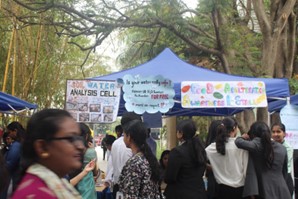

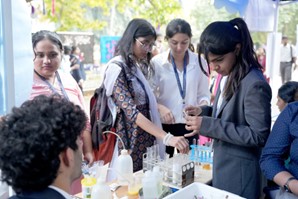
2013 Second Annual Conference
2013 Second Annual Conference on Interdisciplinary Approaches to Social Responsibility – Evidences of Best Practices.
Functions
- Coordinating with likeminded institutions/centres/research organizations.
- Liaising with policy making bodies and providing them with research inputs.
- Organising and promoting healthy discussions/debates on social and policy issues.
- Providing research and internship opportunities to students interested to pursue social and policy related research/studies.
- Encouraging and helping faculty members to research and publish in the area of policy studies.
- Generate funding and undertake research aimed at promoting social equity through policy interventions.
- Developing and organizing a data bank accessible to those interested to pursue research in social and policy issues.
Objectives
- To facilitate interdisciplinary and transdisciplinary research in social and policy issues.
- To conduct advanced research and data mining to constantly update the stakeholders of policy making on new policies and emerging challenges.
- To organize seminars, conferences, workshops and training programmes for the students, faculty members, NGO representatives on social and policy issues.
- To seek funding from external sources for research/advocacy projects on various social and policy issues.
- To build data bank on social and policy issues and thereby promote scientific research in the area of social policy.
Reach Us
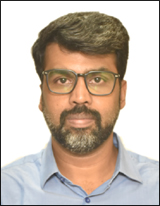
L T Om Prakash, PhD
Director, Centre for Social and Policy Research
director.cspr@christuniversity.in